Thursday, 26 April 2012

Sense of Taste


This sense was a tough one. At first I kept thinking "how can you taste a space?" "what taste can a space have?" For this sense, I went to a park and a herb garden. Although it was difficult to identify tastes and diagram them, my other senses, such as smell, assisted me in this exercise.


 In the park, I noticed that there was times where it felt and smelt and almost tasted damp or moist, and in other times where it was more dry and dusty. The above diagram shows how the taste of the park differed under the sun or by the shade or in the dark bushes.


The next diagram is about the lake in the park, which added some dimension to sense of taste in the space. It shows how the smell and taste of the space by the lake is different in shade and under sunlight.
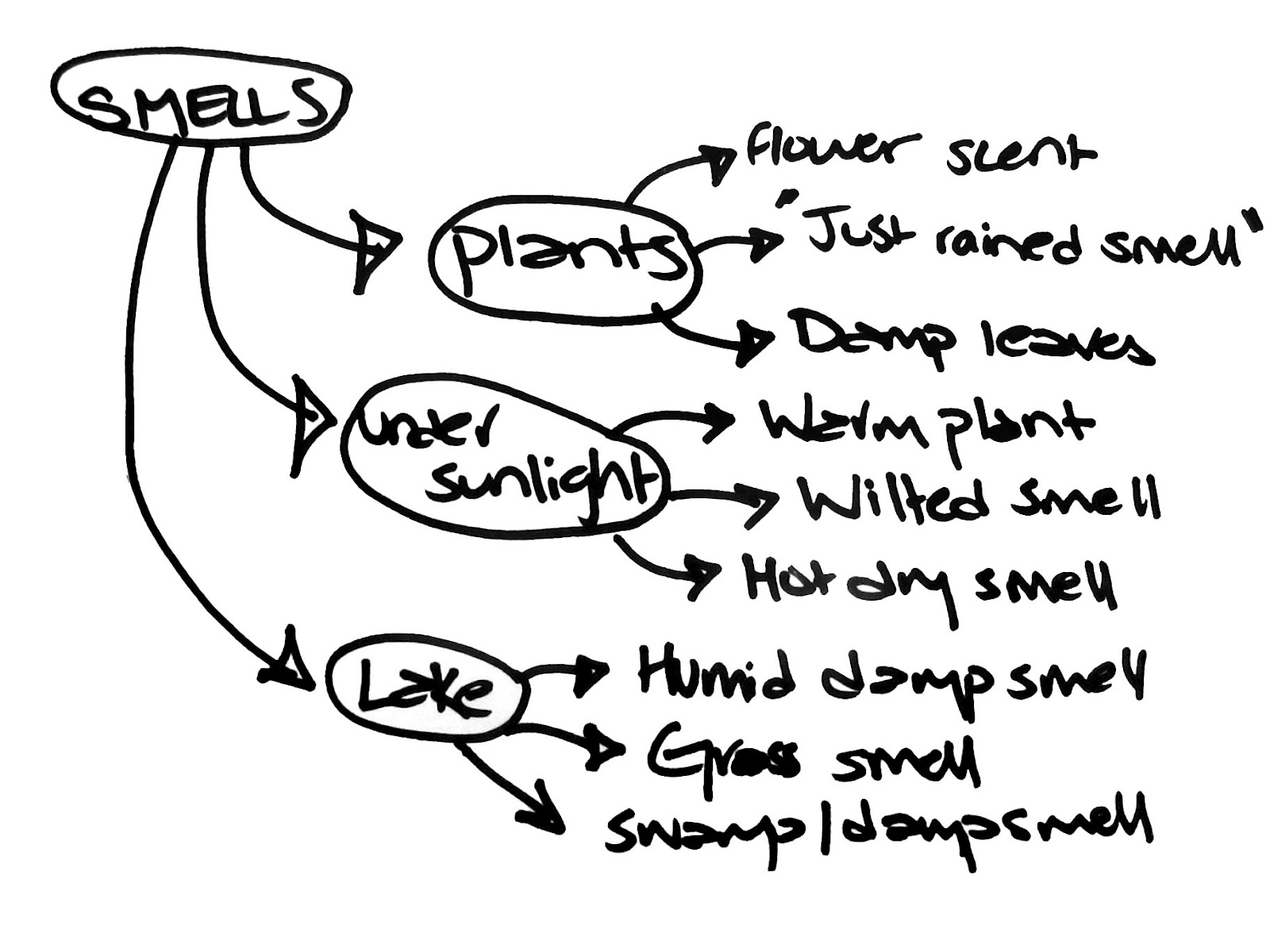


My third diagram is a kind of brainstorm which elaborates further on kinds of tastes and smells within each main area,  by the plants, under sunlight, and  by the lake.


Next, I did a diagram of  my experience as I picked a tree and slowly walked towards and under its leaves and away from it again. What I noticed was that the strength of the floral or fruity flavor grew stronger and stronger as I got closer to the tree, even though there were many flowers on the ground. This is portrayed through the density of the dots in the diagram.


My final diagram is about the different things my pallet could pick up in the herb garden. Some of the flavours and scents were of apples, lemon, oregano and other herbs, while some other smells I couldn't quite identify and so I had associations with other smells they were almost identical to, like  my grandma's pantry.


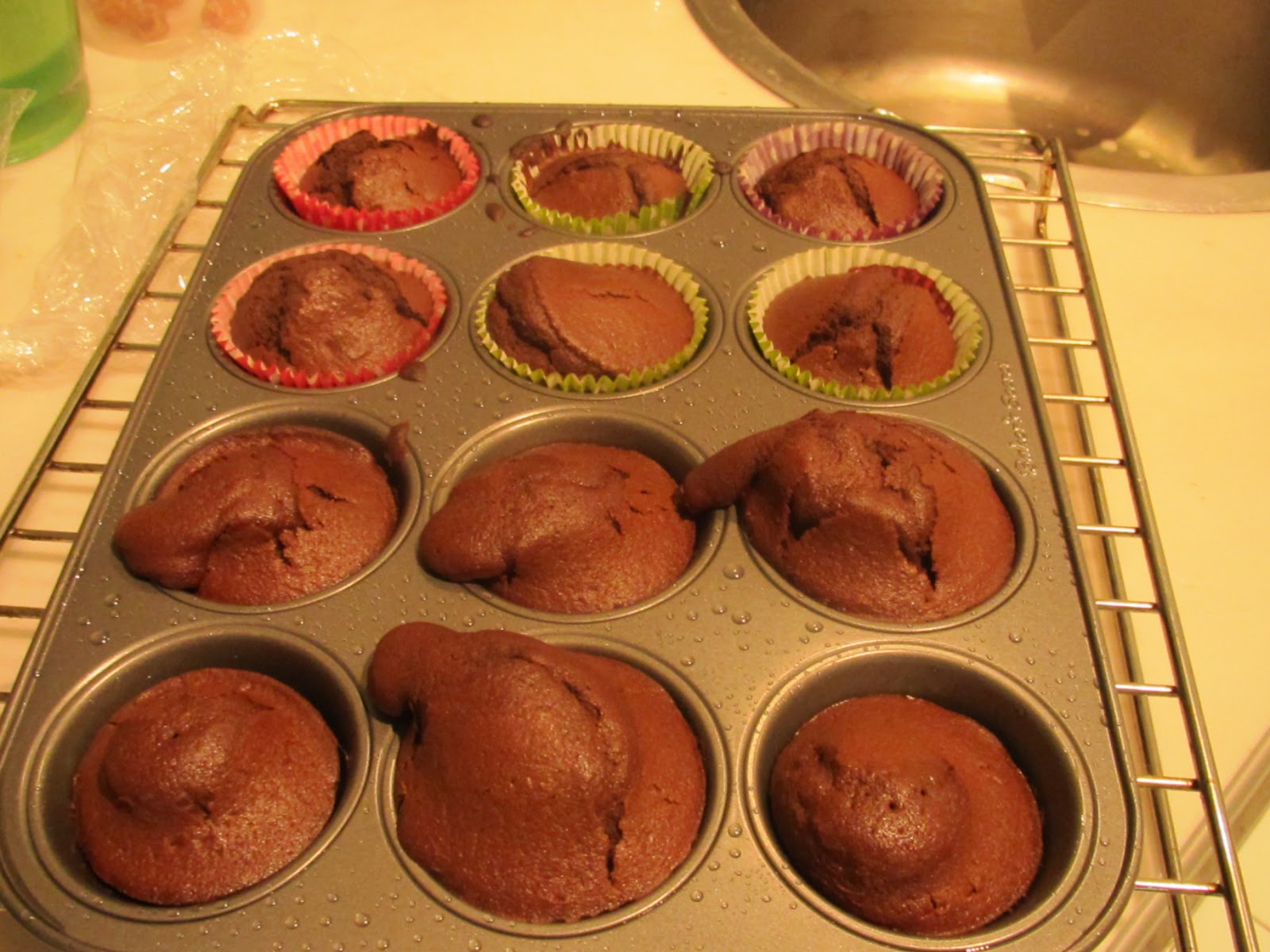
After making the diagrams, I started to make a model about my fourth diagram (density of floral/ fruity smell by trees), and our material for this week was.... cake!


The main cake structure is a representation of the tree, while the circles represent the dots in the diagram. Just as the diagram shows, the circles in the model are more concentrated within, on, and closer to
the tree, which shows the experience of tastes as you approach the tree closer and closer.


Friday, 6 April 2012

Sense of Touch

This week, I explored the sense of touch and how it relates to place making. At first, we were given a few objects which we had to close our eyes and feel different objects and blindly diagram the way the different textures and surfaces felt.
 

My first diagram is about the surface of the bristles of a welcome mat. through different lineweights I've expressed the sharpness and bluntness of some of the bristles.


 The diagram above is about the feeling of tiles; here, i tried to diagram what I felt with my hands.The thing that was most obvious to my hands was the gaps  between the tiles and the inconsistent lines on the smooth tiles.

The next diagram is about the surface of a bundle of straw. As you moved your hand over the straw some bits were curved and smooth, while other parts were spiky, sharp and unpleasant to touch. I tried to convey the two different experiences in the above diagram.


My fourth diagram is about the folding of the coconut tiles and the different depths within its surface  during the overlapping of layers.


Next, I draw a diagram conveying the texture of wire. This wire had threads wrapped around it which created  a pleated texture.


The next diagram is about the floor of the Melbourne Gaol and the different levels. The surface of the floor by the stairs have little round rubber bumps.


The final diagram is once again about the floor of the Melbourne Gaol. This diagram shows the textures of the surfaces near the trees. First off your feet feel a smooth but hard floor, then little pebbled uneven flooring and finally positive and  negative spaces.

This week my model is made of straws. I used white straw to be able to accentuate the shadowing of my model. Through my model, I tried to portray the texture of the welcome mat. I had to show the uneven leveling and the sharpness and bluntness of the bristles.


Thursday, 29 March 2012

Sense of Smell

This week, I explored the sense of smell and how it contributes to making places. I visited Victoria Market and walked all around the various zones, the bakery, meat market, and the fruit and veggie market. During the visit, I made some diagrams that explain what I experienced during the visit.


My first diagram is about the different odors I was able to smell in the bakery area. Through the size of the rectangles I was able to portray the intensity and the common-ness of the smell. In this case, cheese and olives were the more powerful scents, where are orange juice was the least powerful.


The next diagram is about the location of the smells in the bakery. I drew a small plan for the entry of the bakery and marked out where the different smells one encounters wen first entering the bakery come from.
 

The third diagram is about the "big hit" one gets once they enter a space. As soon as you enter the bakery, there is a strong smell of cheese, and when you enter the fruit and veggie market there is a rich smell of herbs until you get closer to the meat market entrance, and once you enter the meat market, you smell the overwhelming odor of raw meat and fish.

My fourth diagram shows the different smells I encountered in the meat market. Raw meat and fish, garbage, sweet chili, marinades, and dips are the main smells within the space.


My last diagram is about the smells within the fruit and veggie market from the bakery door til the meat market entrance. The odors I could smell were herbs, rock-melon, mango, oranges, cigarettes and garbage.

After the visit I made a wire model about the ideas I got from the diagrams. The concept I am trying to portray through my model is that a combination of various smells creates an overall experience that a person can usually associate with a particular space. The coloured wires represent the different smells in a space, and the silver wire wraps up the odors into an experience.


Wednesday, 28 March 2012

Sense of Sound

 This week I had to explore how another sense could be used as a tool for place making, the sense of sound. The sounds I documented were at Federation Square during an open cinema day.


The diagram above shows the main areas where sounds would project. The number of rings on each space shows the magnitude or the loudness of the sounds in that particular area. These main areas were the TV screen, the trams, the cafe and restaurants, and the chattering of people.


 The next diagram unpacks the types of sounds that exist within a particular space, a seating area next to Flinders and Swanston Streets.


The third diagram shows the wavelengths, speed, and consistency of the sounds. Here, I have documented the sounds of a tram, the TV screen, and the chattering of people.


The fourth diagram recorded the speed of the sound of the pedestrian crossing.


My last diagram was about documenting the sounds within the interior of the Federation Square exhibition space. The sound that stood out to me the most was the sound of footsteps, and so I decided to document the sound of footsteps in this sketch. My findings show that the footsteps on the ground sound more quiet and there is less of a "thump" compared to when there are footsteps on the stairs. The model I have made this week represents the concept of this final diagram.


 This week the model was made from plaster. Here, I am trying to show that the footsteps higher up on the stairs are louder and have more power compared to the more faint footstep on the ground floor. I tried to convey this idea by making a bigger and taller footstep on the stairs and a shorter and smaller footstep on the ground.